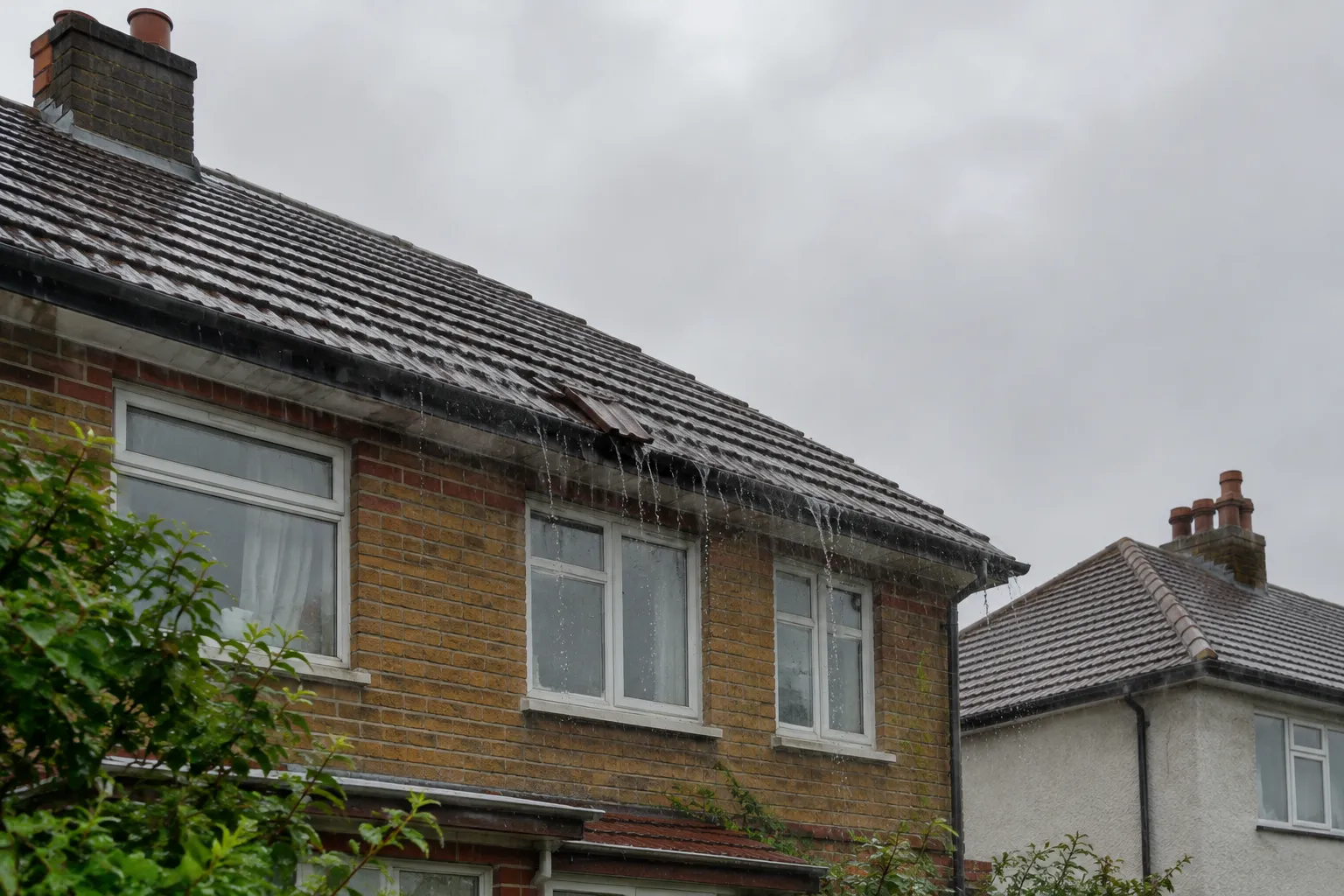
If your roof is leaking, the fastest way to stop things getting worse is to catch the water, keep people clear of a wet or bulging ceiling, and get a local roofing specialist out to find where it's getting in and repair it. A small drip rarely stays small: water tracks along timber and across ceilings long before it shows as a stain, so by the time you can see it, the leak has usually been running a while. This page covers what to do in the first hour, flat roofs versus pitched roofs, why leaks show up in heavy rain, and when it's safe to deal with one yourself. If water is actively flooding a room, see emergency roof repair for what to do while you wait, or get quotes from local specialists now.
What should I do if my roof is leaking in the UK?
Move anything valuable out from under the drip, put a bucket or bowl underneath it, and check the loft for the source if it's safe to get to. If a ceiling is bulging with trapped water, make a small hole at the lowest point so it drains into a container rather than coming down on its own. Then call a local specialist to find and fix the actual leak, because the inside work only buys time.
While you're waiting, take a few photos of the water, the stain and any damage to contents or plasterboard. Buildings insurance can cover sudden damage like a storm-ripped tile, but the Association of British Insurers is clear that it's not a maintenance contract: damage from a roof that simply wasn't kept up won't be covered. Whether a particular leak is covered depends on the policy and the cause, so check with the insurer rather than assuming either way. If the loft insulation has got wet, it's usually best to dry it out or replace it, since damp insulation left in place can spread damp further into the roof timbers. If water is pouring in fast enough to flood a room, that's an emergency rather than a routine repair.
What can you put on a flat roof to stop it from leaking?
A flat roof leak is usually sealed on the spot with a liquid rubber or bitumen roofing sealant, worked into the cracked or lifted area once it's clean and dry. That's a stopgap in most cases. Flat roofs are typically covered in felt, GRP (fibreglass) or an EPDM rubber membrane, and a repair that actually lasts usually means patching or replacing a section of that covering, not just sealing over the top of it.
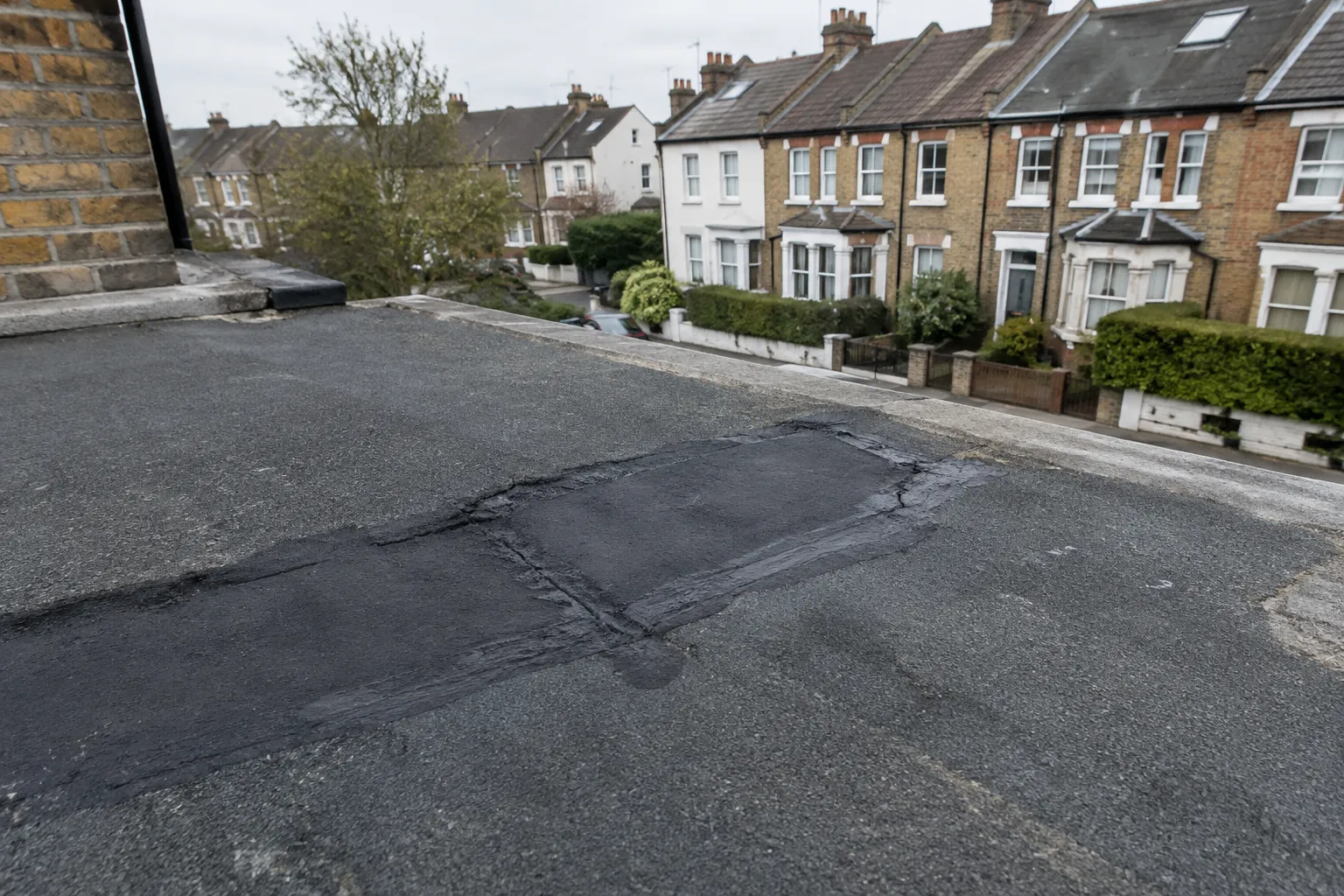
A specialist will also check for pooling water sitting on the roof after rain, a common reason flat roofs start leaking in the first place, since standing water finds any weak spot in the covering given enough time. See flat roofing for more on the materials and what changes the price of a repair.
Is it normal for a roof to leak in heavy rain?
A well-maintained roof shouldn't leak in heavy rain, so if yours does, something's already broken or worn: a cracked or slipped tile, failed flashing around a chimney or roof light, or a blocked gutter that's overflowed down the wall instead of carrying the water away. Heavy rain doesn't cause the leak on its own, it just finds the gap that was already there, often for the first time during a storm.
Wind-driven rain gets into gaps that light rain never reaches, which is why a roof can seem fine for years and then leak in one bad storm. Regular checks, clearing gutters each autumn and looking at flashing and ridge tiles before winter, can prevent a small gap turning into a leaking roof once heavy rain arrives.
Can you fix a roof leak while it's raining?
Not safely, and not properly. A wet roof is slippery, and most sealants and repairs need a dry surface to bond, so anything done from the outside while it's raining is a stopgap at best. The safer approach is to manage the leak from inside, with buckets, moved belongings and a small drainage hole in a bulging ceiling, and wait for a dry spell or a specialist with the right access equipment.
The Health and Safety Executive's guidance on working at height covers exactly this kind of job: ladders and wet or sloped roofs are a fall risk, and it's not a risk worth taking without the right training and equipment. A specialist carrying emergency cover can sometimes get a temporary patch on in a lull between showers, but the full repair still waits for dry conditions.
Questions people ask
How to stop water leaking through a roof?
Find exactly where the water is getting in, not just where the drip lands indoors, since water travels along timber and felt before it shows on a ceiling. Check the loft for wet insulation or a damp patch and trace it back to its highest point. On a pitched roof that's often a cracked, slipped or missing tile or failed flashing; on a flat roof, a split or lifted seam in the covering. A temporary seal buys time, but tracing and repairing that exact spot is what actually stops it.
How to use Dr. Fixit for roof leakage?
Dr Fixit is a waterproofing brand sold mainly in India and other markets, and it isn't one you'll typically find on the shelf at a UK builders' merchant. If you've come across the name, ask a local roofing specialist which UK-stocked sealant or membrane they'd use for the same repair instead. The right product depends on whether the roof is flat or pitched and what it's currently covered in, which is easier to judge in person than from a tub label.
How do I stop my roof leaking in heavy rain?
You can't stop a leak for good while it's raining, only slow it down. Keep gutters and downpipes clear so rainwater can carry away rather than overflow, and use a temporary seal or cover over a known gap if it's safe to reach from inside or at ground level. The lasting fix, whether that's a replaced tile, a resealed flat roof or repaired flashing, needs a dry roof and is a job for a local specialist.
Can leaky gutters be repaired?
Yes. Most gutter leaks come from a cracked section, a failed joint or a seal that's perished, and a specialist can usually repair or reseal that section rather than replace the whole run. A gutter that's sagging, pulling away from the fascia, or rusted through in several places is more often cheaper to replace outright than patch piece by piece. See rain gutter repair for what that job usually involves.
My gutter is leaking between the house and the gutter. What can I do to fix this?
That's usually the gutter pulling away from the fascia board, or a bracket holding it has come loose, so water runs down behind the gutter and down the wall instead of into the channel. Refitting and resealing the bracket is often enough. If the fascia board itself has rotted, that needs repairing first, since the gutter has nothing solid to sit on otherwise. A specialist can tell you which it is on a visit.
How do I fix a roof leak myself?
You can handle the small, ground-level parts yourself: clearing a blocked gutter, drying out or replacing wet loft insulation, or sealing an accessible small gap with a roofing sealant. Getting onto a wet or sloped roof is a different matter. HSE's guidance on working at height treats roof work as a real fall risk, so for anything that means climbing up, it's safer, and usually cheaper in the long run, to get a specialist to do it properly the first time.
Read on
- Roof leaks & leak repair
Water coming through your ceiling? What to do right now, safely, and how to get a local emergency roof leak repair in Wandsworth.
Sources
Updated